If you grew up on chikwangue wrapped in banana leaves, a pot of pondu simmering on the stove, or the smell of dawa dawa hitting hot oil, finding the “real thing” in the UK can be a challenge. Supermarket shelves rarely stock the staples that Central African, West African and Caribbean households actually cook and shop with every week.
This guide brings together the most-searched African and Caribbean grocery, food and beauty essentials — what they are, where they come from, and where to find them online in the UK — so you can shop with confidence whether you’re cooking a family recipe or building your weekly skincare routine.
In this guide:
- Cassava staples: kwanga, pondu, ntaba and cassava leaves
- The spice rack: prekese, aidan fruit and dawa dawa
- Tinned and dried fish favourites
- Breakfast and store-cupboard basics
- African & Caribbean beauty essentials
- Frequently asked questions
1. Cassava Staples: Kwanga, Pondu, Ntaba and Cassava Leaves
Central African cooking revolves around cassava in almost every form, and three words come up again and again in shopping lists: kwanga, pondu and ntaba.
Kwanga (also spelled chikwangue or kwanga cassava bread) is a fermented cassava dough that’s steamed and wrapped in leaves, giving it a firm, slightly tangy texture that’s eaten alongside soups and stews. It’s a genuine staple across the Democratic Republic of Congo, the Republic of Congo, Gabon, and Cameroon, and the fermentation process is what makes cassava safe and digestible — you can read more about how it’s traditionally made on Wikipedia’s Chikwangue entry.
Pondu (also called cassava leaves) is made from pounded cassava leaves, usually cooked down with palm oil, onions and sometimes fish or meat until soft and stew-like — a Congolese comfort food equivalent to a hearty greens stew. Cassava leaves on their own (fresh, frozen or dried) are the base ingredient for pondu and several other Central and West African leaf soups.
Ntaba refers to goat meat — a favourite for grilling or slow-cooking in Central African households, usually paired with kwanga or rice.
Rounding out this category, corn husk (used to wrap foods like kenkey and tamales during cooking) and corn dough (fermented, milled corn used as the base for banku and kenkey) are pantry essentials for anyone making traditional Ghanaian or wider West African dishes at home.
You’ll find cassava leaves, dried vegetables, and frozen staples like these in our Fruit & Vegetables category, grain and flour staples, including corn dough in African Grain, Flour & Cereals, and ready-to-eat or frozen options such as kwanga and ntaba-style meats in African Ready Foods and Meat & Seafoods.
2. The Spice Rack: Prekese, Aidan Fruit and Dawa Dawa Explained
Three seasonings define the aroma of West African soups: prekese, aidan fruit and dawa dawa — and here’s a fact that surprises a lot of home cooks: prekese and aidan fruit are the same plant. Botanically known as Tetrapleura tetraptera, it’s called prekese in Ghana’s Akan language and aidan fruit (or “aiden fruit”) in Nigeria, where it’s prized for the sweet, smoky aroma it gives to light soup and palm nut soup (source: Wikipedia, Tetrapleura tetraptera).
Dawa dawa is a completely different ingredient — a fermented seasoning made from the seeds of the African locust bean tree (Parkia biglobosa). Sold as dark, sticky balls or cakes, it delivers the same deep umami punch that miso or fish sauce brings to other cuisines, and it’s essential in okra soup, egusi, and jollof-style dishes across Ghana and Nigeria.
Stock up on prekese, aidan fruit, dawa dawa and other traditional seasonings in our Herbs & Spices category, part of our wider African Condiments, Oil & Herbs range.
3. Tinned and Dried Fish Favourites
Fish is at the heart of African and Caribbean cooking, and a handful of products come up over and over in UK shopping searches.
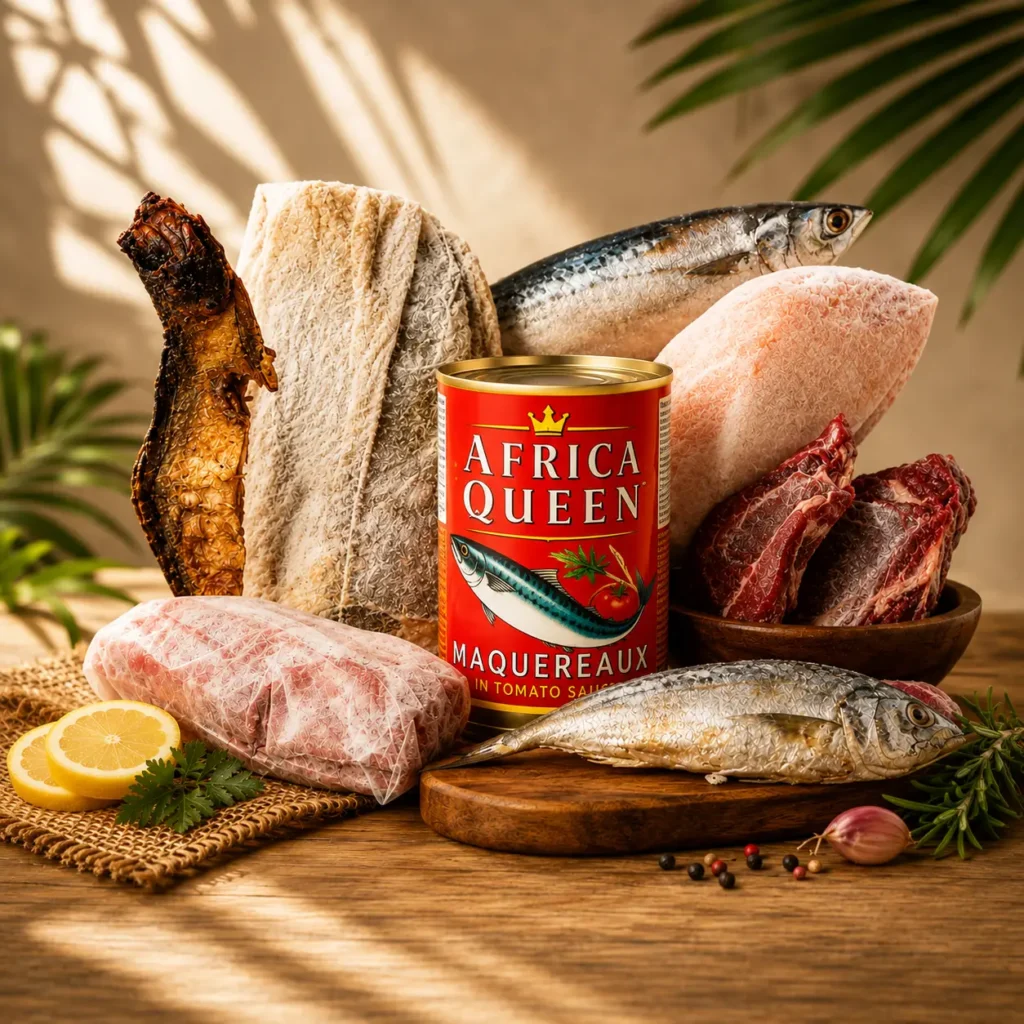
Pilchards in tomato sauce — including the well-known Glenryck pilchards brand — are a store-cupboard essential for quick stews, fish cakes and sandwich fillings. Tinned pilchards in tomato sauce are affordable, protein-rich and ready in minutes, which is exactly why they’re a weekly staple in so many households.
Mangala fish is a dried or salted fish variety popular in Central African cooking, typically simmered into soups and sauces for a deep, savoury base flavour.
You’ll find tinned pilchards, Glenryck pilchards and mangala fish in our Meat & Seafoods range, which covers fresh, frozen, smoked, salted and canned options in one place.
4. Breakfast and Store-Cupboard Basics
Not every essential is a fresh ingredient—some are pantry basics that make weekday cooking possible. Nestum, the popular cereal brand, is a breakfast favourite in many African and Caribbean households, often mixed with hot water or milk for babies and adults alike. Alongside corn dough and dried grains, it belongs in our African Grain, Flour & Cereals category, where you’ll also find flours and grains for fufu, banku and porridge.
5. African & Caribbean Beauty Essentials: Soaps, Creams and Hair Care
Beauty and personal care are just as much a part of African and Caribbean shopping baskets as food — and a handful of brand names dominate the searches: carotone, caro light, badedas (often searched as “badidas”), skinler cream, funbact-A cream, carbolic soap, tetmosol soap, epiderm cream, osun dudu black soap and coconut oil hair food.
- Carotone and Caro Light (including Carotone cream) are well-known brightening skincare lines popular for even-toning routines.
- Badedas, sometimes searched as “badidas,” is a long-standing shower gel and soap brand loved for its herbal, spa-style scent — our range includes both the classic soap and the badedas shower gel.
- Skinler cream and epiderm cream are targeted skincare creams used within daily routines for smoother, more even-looking skin.
- Funbact-A cream is reached for to help soothe and care for irritated skin.
- Carbolic soap and tetmosol soap are classic medicated, antiseptic bar soaps used for everyday cleansing.
- Osun dudu black soap is a traditional African black soap, made the way it’s been made for generations, valued for gentle daily cleansing.
- Coconut oil hair food rounds out the hair care essentials, used to moisturise and seal the hair.
A quick word on skincare safety: skin-brightening and lightening products can contain active ingredients such as hydroquinone or steroids, which need to be used carefully and, in some cases, are prescription-only in the UK. Read the label, patch-test new products, and check with a pharmacist or GP if you have sensitive skin or any concerns — DermNet NZ has a clear, dermatologist-reviewed explainer on how these ingredients work and how to use them safely.
Shop the full range — including cosmetics, bathing products and ointments — in our African Beauty Products category.
Frequently Asked Questions
What is kwanga made from? Kwanga (chikwangue) is made from cassava root that’s soaked, fermented, pounded into a paste, and steamed inside leaves. The fermentation removes natural toxins from the cassava and gives kwanga its distinctive tangy flavour.
Is pondu the same as cassava leaves? Not quite — cassava leaves are the raw ingredient, while pondu is the finished dish made by pounding and cooking those leaves, usually with palm oil and seasonings, into a soft, stew-like side.
What’s the difference between prekese and aidan fruit? There isn’t one — they’re the same plant, Tetrapleura tetraptera. “Prekese” is the Ghanaian (Akan) name and “aidan fruit” is the Nigerian name for the same aromatic spice pod.
What is dawa dawa used for? Dawa dawa is a fermented locust bean seasoning used to add deep, savoury flavour to West African soups, stews and rice dishes — similar to how miso or fish sauce is used in other cuisines.
Where can I buy badedas soap and shower gel in the UK? Duaba Afro Foods stocks badedas soap and badedas shower gel, along with a wider range of African beauty essentials, with delivery across the UK, Europe, the USA, Canada and Australia.
Are carotone and other skin-brightening products safe to use? Many brightening creams are safe when used as directed, but products containing hydroquinone or steroids should be used with care and, where needed, medical guidance — see the safety note in the beauty section above for more detail.
Does Duaba Afro Foods deliver outside the UK? Yes — Duaba Afro Foods ships across the UK, Europe, the USA, Canada and Australia, with free UK delivery on orders over £45.
Can I order these products in bulk for my shop or restaurant? Yes — Duaba Afro Foods offers a dedicated Wholesale & Bulk service for businesses that need African and Caribbean ingredients at competitive prices.
Bring the Taste of Home to Your Door
From kwanga and pondu to carotone and badedas, Duaba Afro Foods brings together 260+ authentic African and Caribbean products in one place, sourced with care and delivered fresh. Browse this week’s deals, get inspired in our recipes section, or head straight to the shop to start your order.
Have a question about an ingredient or product? Get in touch via our Help centre or track an existing order.